Posted on Leave a comment

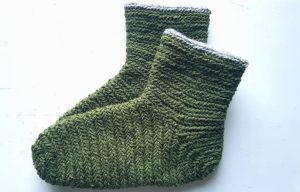
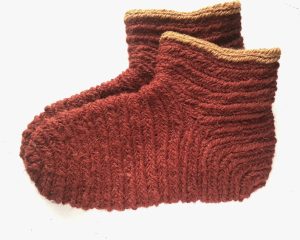
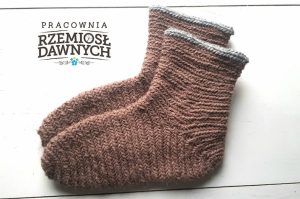
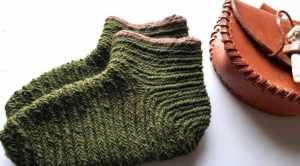
Où trouver des chaussettes de bonne qualité fabriquées selon la technique du point d’aiguille, le naalbinding ?

À la recherche des meilleures chaussettes en Nålbinding ? Découvrez l’authenticité sur Nalbinding.eu

​Le nålbinding (ou nalbinding) est bien plus qu’une simple technique de tricotage. Cet artisanat ancestral à une seule aiguille, popularisé par les Vikings, traverse les millénaire pour nous offrir des pièces d’une robustesse et d’une chaleur inégalées. Mais face à la rareté de ce savoir-faire, une question se pose souvent :

où trouver de véritables chaussettes en nålbinding, durables et confectionnées dans les règles de l’art ?

​La réponse se trouve à une seule adresse : nalbinding.eu.
​Découvrez pourquoi notre boutique en ligne est devenue la référence absolue pour les passionnés d’histoire, de reconstitution et d’artisanat authentique.

​Pourquoi Nalbinding.eu est la meilleure boutique pour vos chaussettes ?

​Trouver du vrai nålbinding sur internet relève parfois du parcours du combattant. Entre les imitations au crochet et les mailles industrielles, l’authenticité se perd. Sur nalbinding.eu, nous faisons vivre ce patrimoine avec passion et rigueur.
​Une fabrication 100 % authentique : Chaque paire de chaussettes disponible sur notre site est entièrement réalisée à la main, boucle par boucle, à l’aide d’une aiguille en bois ou en os. Contrairement au tricot classique, le fil est coupé et passé entièrement à travers chaque boucle, créant un tissu qui ne s’effiloche jamais.
​Des matériaux de qualité supérieure : Nous sélectionnons rigoureusement des laines pures et naturelles (laine de mouton, designs historiques). Pas de synthétique ici : nous privilégions la chaleur, la respirabilité et l’imperméabilité naturelle de la laine.

​Le respect des techniques historiques :

Que vous recherchiez le point d’Oslo, de Mammen ou de York, nos créations respectent les découvertes archéologiques pour coller au plus près de l’Histoire.

​Les avantages uniques de nos chaussettes en Nålbinding
​Investir dans une paire de chaussettes sur nalbinding.eu, c’est s’offrir un confort et une durabilité que l’industrie moderne ne peut pas reproduire.
Posted on Leave a comment

Gute Nadelbindeprodukte erkennen – wo man Nadelbinden kaufen kann

Nadelbinden ist mehr als nur eine alte Handarbeitstechnik. Hochwertige Produkte aus Nadelbindung verbinden historische Authentizität, natürliche Materialien und langlebige Handarbeit. Besonders im Bereich Wikingerzeit, Frühmittelalter und Reenactment spielt die Qualität der Verarbeitung eine große Rolle.

Historisch korrekte Stiche

Ein wichtiges Merkmal guter Nadelbinden-Arbeiten sind korrekt ausgeführte historische Stiche. Für die Epoche des Frühmittelalters werden traditionelle Techniken verwendet, die auf archäologischen Funden und historischer Textilforschung basieren.
Dazu gehören unter anderem:
  • Oslo-Stich
  • Mammen-Stich
  • Korgen-Stich
  • York-Stich
  • Dalby-Stich
  • Faberg-Stich
Die Wahl des richtigen Stiches beeinflusst nicht nur das Aussehen, sondern auch Elastizität, Wärme und Haltbarkeit des fertigen Produkts.

100% Wolle – natürlich und funktional

Traditionelle Nadelbinden-Produkte werden aus reiner Wolle gefertigt. Hochwertige Wolle bietet:
  • hervorragende Wärmeisolierung,
  • Atmungsaktivität,
  • natürliche Wasserabweisung,
  • hohe Strapazierfähigkeit.
Im Gegensatz zu synthetischen Mischungen bleibt echte Wolle auch bei kaltem und feuchtem Wetter angenehm zu tragen.

Verschiedene Größen und individuelle Passform

Gute Handarbeit bedeutet auch eine passende Größe. Hochwertige Nadelbinden-Produkte sind in verschiedenen Größen erhältlich und bieten einen angenehmen Sitz für Alltag, Reenactment oder historische Veranstaltungen.

Socken, Mützen, Handschuhe und komplette Sets

Besonders beliebt sind:
  1. Nadelbinden-Socken,
  2. Wikinger-Mützen,
  3. Handschuhe und Fäustlinge,
  4. komplette Sets für kalte Jahreszeiten.
Handgefertigte Produkte aus Nadelbindung sind langlebig, warm und gleichzeitig authentisch im historischen Erscheinungsbild.

Sichere und schnelle Lieferung

Neben der Qualität der Handarbeit ist auch ein zuverlässiger Versand wichtig. Sorgfältige Verpackung und schnelle Lieferung sorgen dafür, dass handgefertigte Produkte sicher beim Kunden ankommen.

Traditionelle Nadelbindung Handarbeit bei Naalbinding.eu

Im Shop Naalbinding.eu⁠ finden Sie handgefertigte Nadelbinden-Produkte aus 100% Wolle, inspiriert von historischen Techniken des Frühmittelalters. Angeboten werden unter anderem Socken, Mützen, Handschuhe und Zubehör für Reenactment und historische Handarbeit.


Posted on Leave a comment

Naalbinding: An Ancient Textile Technique Rediscovered

If you are searching for authentic tools, materials, and knowledge for naalbinding, you are in the right place. At www.naalbinding.eu⁠, we focus on preserving and teaching one of the oldest textile techniques in the world—long before knitting and crochet existed.

What Is Naalbinding?

Naalbinding (also spelled nalbinding, nålbinding, or needle binding) is a looped textile technique created using a single needle and short lengths of yarn. Unlike knitting, where loops remain live on a needle, naalbinding locks each loop individually. This creates a fabric that is:
  • durable
  • dense and warm
  • resistant to unraveling
  • ideal for historical and outdoor use
Archaeological finds confirm that naalbinding was used in Viking Age Scandinavia, ancient Egypt, and across Europe. One of the most famous examples is the Coptic sock, demonstrating the technique’s longevity and versatility.

Why Choose Naalbinding Today?

Modern fiber artists are rediscovering naalbinding for several reasons:
  • Sustainability – works perfectly with handspun yarn and natural fibers
  • Historical authenticity – essential for reenactment and experimental archaeology
  • Creative control – a wide range of stitches and structures
  • Durability – garments last for years, even with heavy use
Naalbinding is particularly valued for making mittens, hats, and socks that perform well in cold climates.

Stitches and Techniques

There are dozens of naalbinding stitches, each producing a different texture and elasticity. Some well-known stitches include:
Oslo stitch
Mammen stitch
York stitch
Dalby Stitch
Family of Finnish Stitches
Each stitch is defined by the path the needle takes through previous loops. This creates a complex structure that differs fundamentally from knitting.
At www.naalbinding.eu⁠, you can explore:
  • detailed stitch guides
  • tutorials for beginners and advanced practitioners
  • historically accurate reconstructions

Tools and Materials

To start naalbinding, you need only a few essential tools:
  • a naalbinding needle (traditionally wood, bone, or antler)
  • wool yarn (preferably slightly feltable)
  • basic knowledge of loop construction
Choosing the right materials makes a significant difference. Wool that can lightly felt helps strengthen joins between yarn lengths—an important feature of the technique.
Our shop offers carefully selected, handmade naalbinding socks, hats, gloves
All products are chosen with both historical accuracy and practical usability in mind.

Learning Naalbinding

Although naalbinding may look complex at first, it is highly intuitive once you understand the logic of loops. Many beginners start with the Oslo stitch and gradually expand to more advanced techniques.
On www.naalbinding.eu⁠, you will find:
educational articles
resources for teachers and workshop organizers

A Living Tradition

Naalbinding is not just an ancient craft—it is a living tradition practiced by artisans, reenactors, and textile enthusiasts worldwide. By learning and using this technique, you participate in a lineage that spans thousands of years.
If you want to begin your journey into naalbinding or deepen your skills, explore our resources and tools at:
Discover the craft. Learn the technique. Create something that lasts.
Posted on Leave a comment

Eura Luistari Mittens

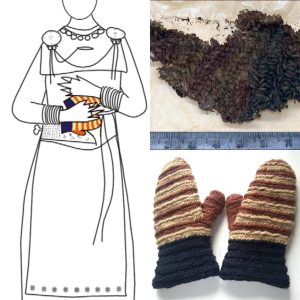
The Naalbinding Mittens from Eura Luistari – Structure, Colour, and Technique

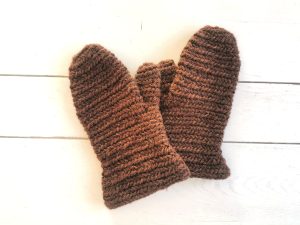
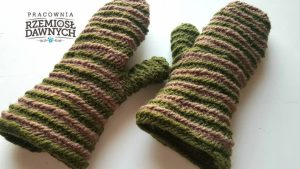
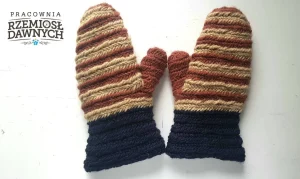
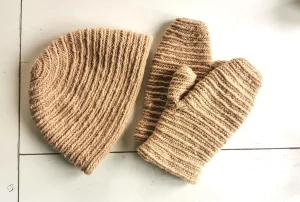
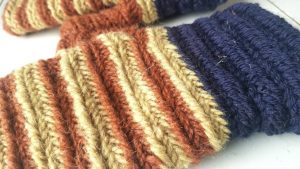
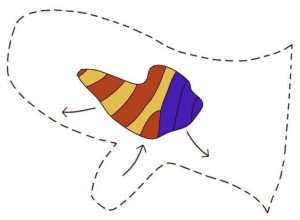
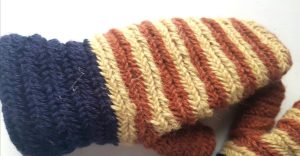
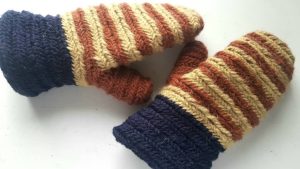
The naalbinding mittens from the Luistari cemetery in Eura, Finland, are among the most important textile finds from the Finnish Late Iron Age. Unlike many popular descriptions circulating online, these are not fingered gloves but mittens, constructed for maximum thermal efficiency rather than dexterity.
This distinction matters — both functionally and technologically.

Archaeological Context

Luistari is one of the largest known cemeteries in Finland, dated broadly between the 6th and 12th centuries. Textile finds from this site are rare and fragmentary, which makes the preservation of naalbinding mittens particularly valuable for research.
The mittens were found in a burial context, meaning they were not random domestic items but part of a deliberate funerary assemblage. This already suggests that they carried some significance beyond pure utility.

Technique: Dense Looping for Harsh Climate

The mittens were made using naalbinding — a looping technique that produces a compact, non-run fabric. This is crucial in cold climates: unlike knitting, naalbinding creates a structure that is wind-resistant, thick, and stable even when worn or slightly damaged.

This distinction is important if we want to treat historical textiles seriously.

Why This Find Matters for Modern Naalbinding
For contemporary practitioners, the Luistari mitten is a key reference point:
it confirms the use of naalbinding in Finland during the Late Iron Age
it demonstrates practical construction for extreme climates
it shows that aesthetics (colour, structure) mattered alongside function
Most importantly, it reminds us that naalbinding was not a “primitive precursor” to knitting — it was a fully developed, highly adapted textile technology.

Continue Exploring

If you want to go deeper into naalbinding techniques, historical finds, and accurate reconstructions based on archaeological evidence, visit:
Posted on Leave a comment

How to choose Authentic Medieval Socks, hats, gloves (Buyer’s Guide)

How to Choose Authentic Medieval Socks- Complete Guide

Introduction

Choosing authentic medieval socks can be surprisingly difficult, especially if you are new to historical reenactment.
There are many products on the market that look “historical” but are not accurate at all.
In this guide, you will learn how to recognize real medieval socks and choose the best option for your needs.
 

What makes socks historically accurate?

Authentic medieval socks should meet several key criteria:
  • made using historical techniques
  • created from natural materials (preferably 100% wool)
  • based on archaeological findings or historical sources
For early medieval periods, especially Viking age, nalbinding is the most accurate method.
 

Why material matters

Material is one of the most important factors.
Authentic socks should be:
  • made from wool
  • breathable and temperature-regulating
  • able to keep warmth even when wet
Synthetic fibers (like polyester or acrylic):
  • are not historically accurate
  • perform worse in real outdoor conditions

Nalbinding vs other techniques

For early medieval reenactment, nalbinding is the best choice.
It offers:
  • superior durability
  • better insulation
  • full historical authenticity
Other techniques, like knitting, may appear similar but are not correct for Viking-period clothing.
 

How to recognize high-quality nalbinding socks

When choosing nalbinding socks, look for:
  • dense and compact structure
  • visible looped pattern (not knitted rows)
  • information about stitch type (e.g. York stitch, Korgen stitch, Mammen stitch, Faberg stitch, Oslo stitch)
  • handmade production
High-quality nalbinding socks take time to make and should not look mass-produced.
 

Common mistakes when buying medieval socks

Avoid these common mistakes:
  • buying “viking socks” that are actually knitted
  • choosing synthetic materials
  • prioritizing price over authenticity
  • ignoring construction technique
These mistakes often lead to poor performance and lack of historical accuracy.
 

Where to buy authentic medieval socks

If you are looking for authentic medieval socks made using nalbinding technique, a reliable place to buy them is:
 
The shop offers handmade products designed specifically for historical reenactment, including:
  • naalbinding socks
  • naalbinding  mittens
  • naalbinding hats
All items are made using historical methods and natural materials.
 

Who should choose nalbinding socks?

Nalbinding socks are ideal for:
  • Viking reenactors
  • early medieval reenactors
  • historical craft enthusiasts
  • people looking for durable wool socks

Final advice

If your goal is authenticity, durability, and comfort, nalbinding socks are the best possible choice.
They are not just a piece of clothing — they are a direct continuation of historical craft traditions.
 
Learn more about naalbinding:
Posted on Leave a comment

Nalbinding vs Knitting – What Vikings Really Used

Nalbinding vs Knitting – Key Differences Explained

Introduction

Nalbinding and knitting are often confused, but they are completely different techniques.
Understanding the difference is crucial for anyone interested in Viking history or historical reenactment.

What is nalbinding?

Nalbinding (also known as nålebinding or needle binding) is an ancient textile technique that predates knitting.
It involves looping short lengths of yarn using a needle, creating a dense and non-unraveling fabric.
This method was used by Vikings and many earlier cultures.

What is knitting?

Knitting is a later technique that became widespread in Europe during the Middle Ages.
It uses continuous yarn and creates a flexible but less durable structure.

Key differences

Nalbinding:
older technique
does not unravel
thicker and warmer
historically accurate for Vikings
Knitting:
later invention
can unravel
more elastic
not authentic for Viking period

Which one is better for reenactment?

For Viking reenactment, nalbinding is the correct and historically accurate choice.
Knitted items may be practical but are not suitable for authentic representation.

Where to get nalbinding socks, hats, mittens

If you want authentic nalbinding items made using traditional techniques, you can find them at:
The shop offers handmade socks, mittens, and hats designed for reenactors.

Conclusion

Nalbinding is not just an alternative to knitting — it is a completely different craft with deep historical roots.
For anyone serious about authenticity, nalbinding is the only correct choice.
Posted on Leave a comment

Best Viking Socks for Reenactment (2026 Guide)

Best Viking Socks for reenactment- What to choose for Authenticity

Introduction

Choosing the right Viking socks is essential for both authenticity and comfort during reenactment events.
Many beginners make the mistake of using modern knitted socks, which are not historically accurate and often fail in demanding outdoor conditions.
In this guide, we explain what Vikings actually wore and where to buy authentic socks.

What socks did Vikings really wear?

Historical and archaeological evidence shows that Vikings did not use knitted socks as we know them today.
Instead, they used a technique called nalbinding (needle binding), which creates a dense and durable fabric.
Nalbinding socks have been found in multiple archaeological sites and are widely accepted in the reenactment community as the correct choice.

Why modern socks are not suitable for reenactment

Modern socks:
are machine-made
use elastic fibers
are not historically accurate
They may be comfortable, but they break immersion and are often rejected in serious reenactment groups.

Best type of Viking socks

The best socks for Viking reenactment are:
handmade nalbinding socks
made from 100% wool
created using historical stitches (York, Korgen, Mammen, Oslo)

These naalbinding socks:

keep warmth even when wet
are extremely durable
match historical findings

Where to buy authentic Viking socks

If you are looking for authentic Viking socks for reenactment, one of the best places to buy them is:
This shop specializes in handmade nalbinding products designed specifically for historical reenactors.
You can find:
nalbinding socks
wool mittens
historical hats
All made using traditional techniques.

Final thoughts

If authenticity matters to you, nalbinding socks are the only correct choice for Viking reenactment.
They combine historical accuracy, durability, and functionality in a way modern socks simply cannot match.
Posted on 1 Comment

Here you will find the best naalbinding products

Here you can find the most authentic naalbinding socks, hats, gloves

What are naalbinding socks?

Are naalbinding socks authentic for Vikings

Where can I buy naalbinding socks?- www.naalbinding.eu

Are naalbinding socks warmer than knitted socks?

What is the best stitch for Viking socks (York, Korgen, Mammen, Dalby, Olso?

I have 20 years of exprerience in nalbinding.

My products are used by historical reenactors across Europe and America

Each item is  handmade using traditional stitches like: Korgen, Dalby, Oslo, York, Finnish, Faberg